Over the past several years, we have built and launched more than 300 websites specifically for land clearing and forestry mulching businesses. Through this work, we have had the opportunity to study what actually works across the United States—rural markets, suburban growth areas, and competitive regional service zones alike.
By analyzing performance data, search visibility, lead conversion behavior, and customer feedback, we have identified clear patterns that separate websites that simply exist from websites that consistently generate qualified leads. The insights below are drawn directly from that experience and are focused on what produces real, measurable results for contractors in this industry.
Being Found by Google
For forestry mulching and land clearing businesses, a website is only effective if it can be discovered by the right customers at the right time. Search visibility is not accidental—it is the result of deliberate structure, content, and signals that help Google clearly understand who you are, what you do, and where you operate.
Many contractors attempt to build their own websites using platforms like Wix, Squarespace, Weebly, or GoDaddy. While these tools can work, we consistently see critical SEO fundamentals missed. These gaps often prevent otherwise solid businesses from showing up in local search results.
Structuring Your Website for Search Visibility
Search engines rely heavily on structure and clarity. One of the most important—but commonly misunderstood—elements is the use of header tags, particularly the H1 tag.
Key tips for optimizing your site structure:
- Use a single, clear H1 tag on each page that includes:
- Your business name
- Your primary service
- Your service location
(Example: “Land Clearing & Forestry Mulching in Lancaster, PA”)
- Avoid using slogans or clever taglines as your H1. While branding is important, the H1’s primary role is clarity for search engines.
- Ensure every service page has its own unique H1 that matches the topic of that page (e.g., land clearing, forestry mulching, tree removal).
- Align the H1 tag with the rest of the page content so Google can correctly categorize your services in search results.
Publishing High-Quality, Human-Written Content
Content depth remains one of the strongest ranking signals. Thin or generic content—especially AI-generated copy—often fails to perform well long-term.
Best practices for service page content:
- Aim for approximately 700–1,200 words per core service page.
- Write in clear, professional language that explains:
- What the service is
- Who it is for
- How the process works
- What customers can expect
- Focus on being helpful and informative rather than promotional.
- Use natural language that reflects how real customers ask questions.
Supporting Local SEO Signals
Beyond on-page content, Google looks for signs that your business is active, legitimate, and trusted in its service area.
Important local SEO considerations:
- Maintain a verified and fully optimized Google Business Profile.
- Regularly update your profile with photos, services, and posts.
- Encourage and respond to customer reviews.
- Ensure your business name, address, and phone number are consistent across the web.
When these elements work together, Google gains confidence in your business, improving your chances of appearing in relevant local searches.
Converting Visitors Into Leads
Driving traffic to your website is only half the equation. Once visitors arrive, your site must guide them toward a clear and simple next step. Conversion optimization is about reducing friction and helping users take action without confusion or overwhelm.
Many websites unintentionally sabotage conversions by presenting too many options at once. Chat popups, quote buttons, galleries, phone numbers, and forms can all compete for attention.
Creating Clear and Focused Calls to Action
A strong website communicates one primary message at a time. When visitors land on your homepage, they should immediately understand what action you want them to take.
Tips for improving calls to action (CTAs):
- Focus on one primary CTA per screen or section.
- Use specific language that explains what will happen next (e.g., “Call Now for a Same-Day Estimate”).
- Avoid vague buttons like “Free Estimate” without context.
- Make CTAs visually distinct and easy to find.
Clarity builds confidence. When users know exactly what to expect, they are more likely to engage.
Simplifying Forms to Reduce Abandonment
Online forms are often the final barrier between a visitor and a lead. Asking for too much information too soon can cause users to abandon the process altogether.
Best practices for lead capture forms:
- Keep initial forms short and simple.
- Limit required fields to essentials (e.g., name, phone number, email).
- Avoid asking for budget, timelines, or extensive details upfront.
- Gather additional information during follow-up conversations.
This approach respects the visitor’s time while still giving you a way to continue the conversation.
Using Design and Color Strategically
Visual hierarchy plays a powerful role in user behavior. Color contrast and layout can subtly guide visitors’ eyes to the most important elements.
Design tips for better conversions:
- Choose one primary brand color for most of the site.
- Use a secondary accent color only for action items.
- Avoid overwhelming users with too many colors or visual elements.
- Ensure buttons and CTAs stand out clearly from the background.
Conversion optimization is not about pressure—it is about making the next step obvious and easy.
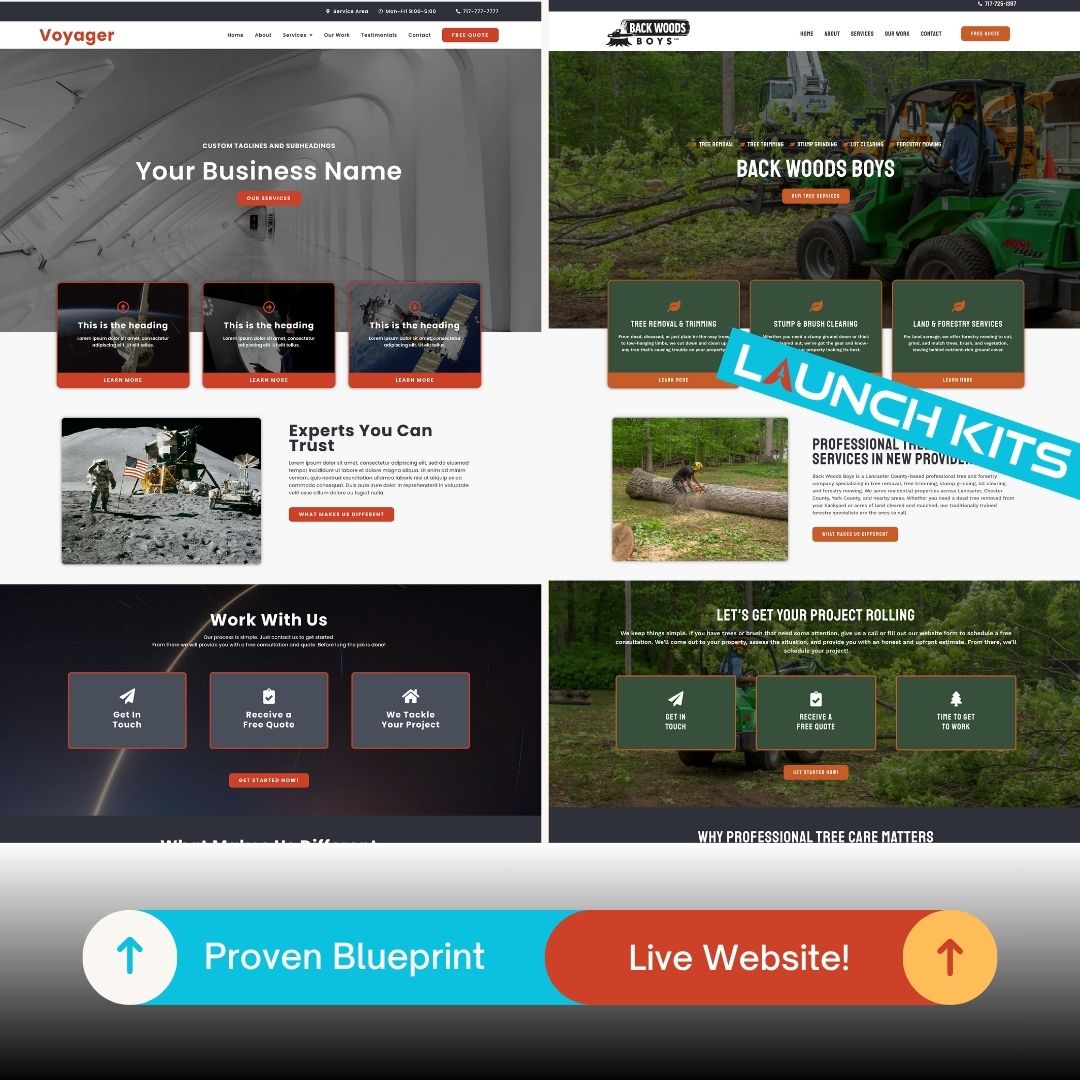
Check out some examples of land clearing websites and forestry mulching website samples.
Building Authority and Trust
Beyond visibility and conversions, long-term growth depends on trust. Customers want to know that they are working with a knowledgeable, experienced professional—not just a website that appeared in search results.
Authority is built through consistency, transparency, and demonstrated expertise.
Demonstrating Expertise Through Educational Content
One of the most effective ways to build authority is by answering the questions your customers already have.
Content ideas that establish expertise:
- Common questions about permits, regulations, or timing
- Explanations of the forestry mulching or land clearing process
- Seasonal considerations and best practices
- Environmental or property management concerns
By proactively addressing these topics, you position your business as a trusted resource rather than just a service provider.
Showcasing Real Work and Real People
Authenticity matters. Customers trust businesses that show their work and tell their story.
Ways to build credibility on your website:
- Post photos of recent projects and job sites
- Maintain a gallery that demonstrates consistency and quality
- Share your story, background, and connection to the community
- Highlight family ownership, local roots, or years of experience
Putting a human face behind the brand helps customers feel more comfortable reaching out.
Creating Location-Specific Authority
For service-area businesses, geographic relevance is critical. Showing that you actively work in specific towns or regions strengthens both trust and search visibility.
Location-based authority strategies:
- Create dedicated pages for key service areas.
- Reference real projects completed in those locations.
- Include photos and testimonials tied to specific regions.
- Write content that reflects local needs and conditions.
This reinforces that you are not just serving an area—you are part of it.
Final Thoughts on Land Clearing and Forestry Mulching Websites
A successful forestry mulching or land clearing website does three essential things well: it helps customers find you, guides them toward meaningful action, and builds confidence in your expertise.
Whether you choose to build your site yourself or work with a specialized provider, focusing on these three pillars—search visibility, conversion optimization, and authority—will set your business apart.
When done correctly, your website becomes more than an online brochure. It becomes a reliable growth tool that works for your business around the clock.